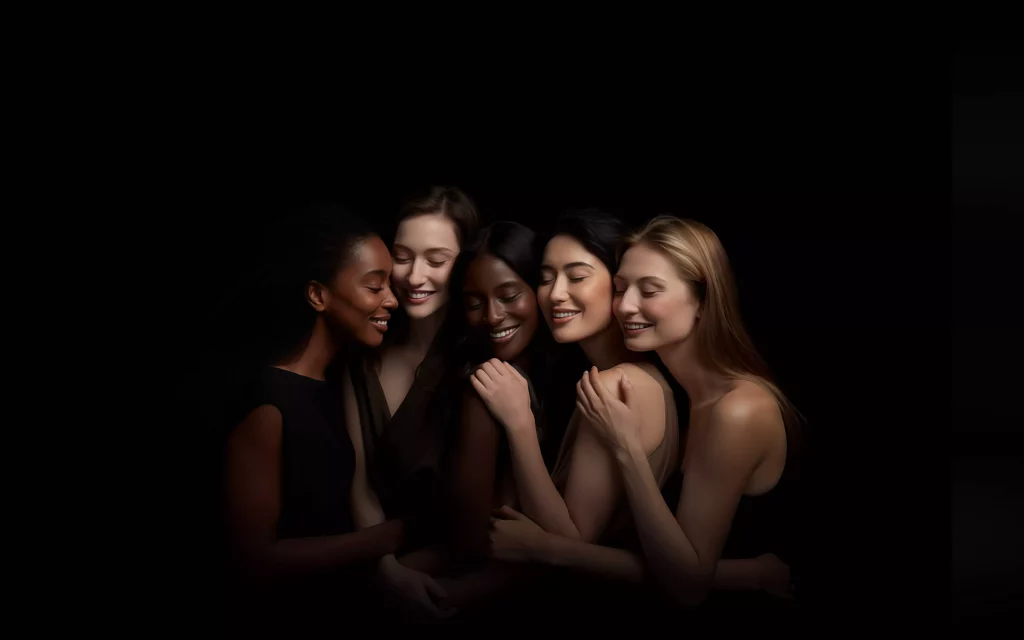
Many people with dark skin come to us after being told elsewhere that the laser was “not for them”. That idea is a leftover from the earliest machines. Today the question is no longer whether it is possible, but with which device.
Why skin colour changes things
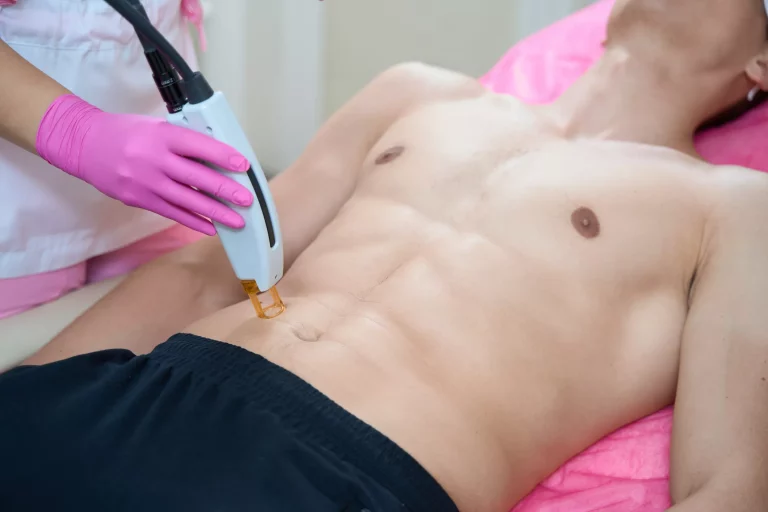
The laser works on a simple principle: it emits light that melanin absorbs, that energy turns into heat, and the heat destroys the follicle.
The difficulty is that melanin is not only found in the hair — it is in the skin too. On light skin the contrast is sharp and the energy goes straight to the hair. On dark skin the epidermis contains a great deal of it as well. With the wrong device, part of the energy is captured by the skin instead of the hair — hence the risk of burns and marks, and disappointing results.
So this is not a matter of “incompatible skin”. It is a matter of wavelength.
Alexandrite or Nd:YAG: the real difference
We work with two medical Candela lasers, and they do not serve the same purpose.
- The Alexandrite (755 nm) is strongly absorbed by melanin. Formidably effective on light to intermediate phototypes, it treats large areas quickly and thoroughly.
- The Nd:YAG (1064 nm) has a longer wavelength. It is far less drawn to the melanin in the epidermis and penetrates more deeply: it reaches the bulb by passing through the skin rather than stopping in it. It is the reference laser for darker phototypes (IV, V and VI).
A centre that only has an Alexandrite cannot treat dark skin properly. Having both devices is not a sales argument — it is what makes the treatment possible at all. We explain how each one works on our technology page.
What actually changes during the session
The assessment matters more
We determine your phototype on the Fitzpatrick scale, look at whether your skin tends to mark after inflammation (what is called post-inflammatory hyperpigmentation), and take any recent tanning into account. This is not a formality: those elements set the parameters.
The settings are more cautious
Lower fluence, longer pulses, systematic cooling of the skin. We prefer a slightly more gradual protocol to an aggressive one that would leave marks. On sensitive or unusual areas, a test on a small patch is done before treating the whole zone.
Sun protection becomes non-negotiable
Dark skin responds to aggression by pigmenting. Sun exposure between sessions is the leading cause of marks. We come back to this in our article on the best season to start.
What results can you expect?
The same as anyone else: a lasting, substantial reduction in hair growth. The number of sessions is comparable — generally 6 to 8 on the body, more on the face. What differs is the route: more gradual settings, sometimes one extra session, and closer attention to sun exposure.
One point deserves to be said plainly: on dark skin the laser often solves two problems at once. Hair growth, of course, but also ingrown hairs and the small dark marks they leave behind — a very common reason for consulting, particularly on the bikini line, the nape and men’s necks.
Precautions worth knowing
- No sun exposure and no self-tanner in the 4 weeks before a session. Recent tanning, even light, means postponing: that is not excessive caution.
- Sunscreen on exposed areas between sessions, including in Belgium and including in winter.
- No lightening products or peels in the preceding days.
- Tell us about your current medication: some make the skin photosensitive.
Come and have your skin assessed
The only way to know what the laser can do for you is to look at your skin and your hair. The first appointment is a free assessment: we determine your phototype, choose the device, give you a number of sessions and a price, and can run a test if you wish.
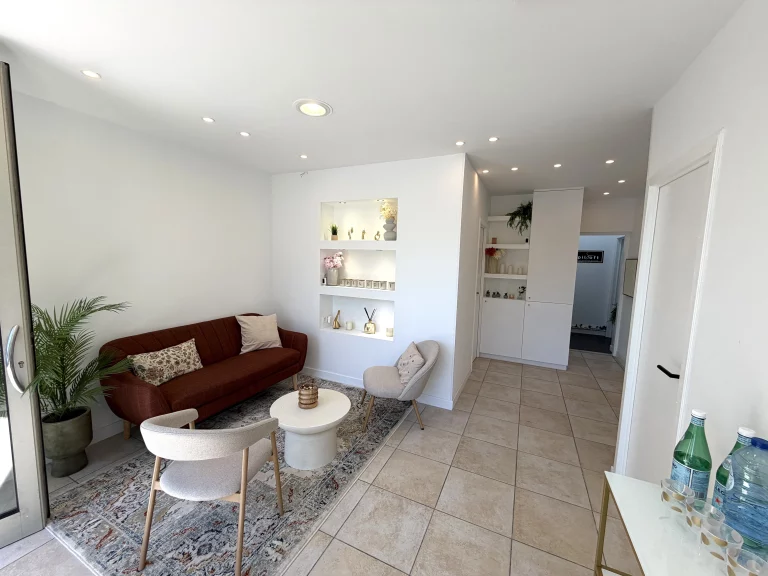
All three of our centres — Uccle, Etterbeek and Watermael-Boitsfort — have both lasers. See our prices or book an appointment whenever you like.